- HOME
- Know Your Tech
- How construction companies lose 15% of project costs to software misalignment (and how low-code fixes it)
How construction companies lose 15% of project costs to software misalignment (and how low-code fixes it)
- Last Updated : June 23, 2026
- 5 Views
- 4 Min Read
This is a guest post by Stevie Amos Burke, Co-Founder of Clean Community Inc.
Highlights
- Construction companies often lose productivity and profitability because their software doesn’t reflect how work actually happens in the field, creating misalignment between processes and operations.
- Standardized platforms can introduce friction when forced onto diverse client requirements and workflows, leading to miscommunication, rework, delays, and inconsistent data.
- AI alone cannot solve these issues, as it automates tasks but doesn’t understand the business context or workflow variations behind them.
- Low-code platforms allow organizations to build applications around their actual processes, making it easier to adapt workflows, integrate AI meaningfully, and evolve with changing project needs.
- Aligning systems with real-world operations can reduce inefficiencies, improve productivity, minimize rework and billing gaps, and significantly recover lost project margins.
Most construction companies aren't struggling because they lack software. They're struggling because the software they have doesn't reflect how their work actually gets done.
That gap—between documented process and field reality—has been at the center of the industry's productivity problem for decades, and it's been widely documented, including by McKinsey & Company. Project management tools, reporting platforms, billing systems—most companies have all of these. On paper, workflows are defined and processes are documented, but that's not how work happens in the field.
Every company operates differently and every client brings its own expectations. A contractor working across companies like AT&T and Verizon isn't just managing projects—they're constantly adjusting to different workflows, reporting standards, and approval processes. That constant context-switching is where things start to break down. Not because the work itself is difficult, but because the systems being used don't reflect how the work actually gets done.
The problem with standardization
For years, the industry tried to solve this through standardization—the idea being that one platform, configured the right way, could work for everyone. But construction doesn't operate like that. It's not a single system. It's a collection of different systems trying to work together, each with its own way of tracking production, handling communication, and processing billing. When those differences get forced into a rigid platform, friction appears almost immediately.
That friction is where the real cost lives. Most operational inefficiencies aren't caused by lack of effort—they're caused by the invisible friction that appears when people, processes, and systems stop moving in alignment.
Miscommunication turns into rework. Delays push billing back. Data becomes inconsistent across teams. And by the time everything gets reconciled, most companies are trying to understand their profitability after the job is already finished—not during it.
Why AI alone can't fix construction workflow problems
This is where a lot of attention has shifted toward AI. Tools like Zia, Zoho's AI assistant can read images, extract data, and automate repetitive tasks faster than any manual workflow ever could. That's genuinely useful. But AI doesn't understand context. It doesn't know why one client requires a specific format or why another company handles approvals differently. So when the underlying system is already misaligned, AI doesn't resolve it—it accelerates it: faster inputs, faster errors, faster breakdowns.
The shift happening now isn't just about adding AI to existing processes. It's about rethinking how systems are built in the first place.
How low-code platforms like Zoho Creator align construction workflows
Platforms like Zoho Creator are changing that approach by making it possible to build applications around how a business actually operates, rather than forcing operations to conform to prebuilt software. That flexibility matters in an industry like construction, where no two workflows are identical.
he right starting point isn't the technology—it's understanding how work actually moves through an organization, from the field to operations to billing. Low-code makes it possible to build around that reality and to adjust as projects evolve, clients change, and requirements shift. AI is then layered in where it genuinely adds value—reducing manual entry, improving accuracy, moving information faster—but always within a system that already works. The technology supports the process. It doesn't replace it.
The ROI of construction workflow automation: What the numbers show
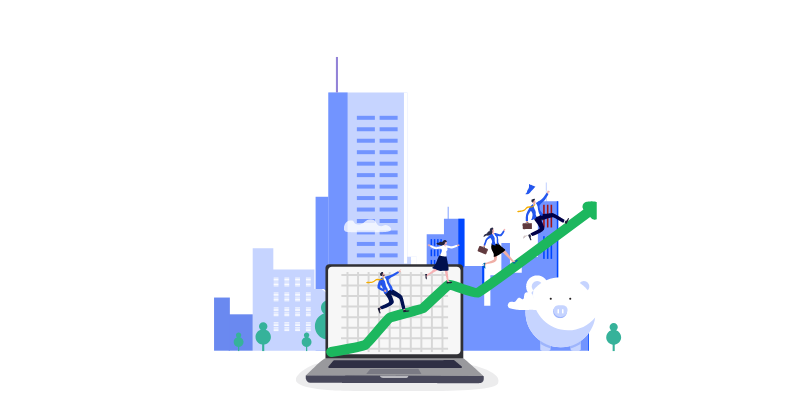
When systems are aligned to how work actually gets done, the savings aren't incremental—they're structural. Companies implementing custom applications and workflow automation on platforms like Zoho Creator typically see:
20–30% reduction in operational inefficiencies
15–25% improvement in productivity
Meaningful reductions in rework, delays, and billing gaps
These gains come from eliminating duplicate data entry, reducing errors, and creating real-time visibility across operations. For broader industry context on digital transformation in operations, McKinsey's research on the case for digital reinvention in operations (https://www.mckinsey.com/capabilities/tech-and-ai/our-insights/the-case-for-digital-reinvention) provides a useful frame of reference.
What this means for a construction project
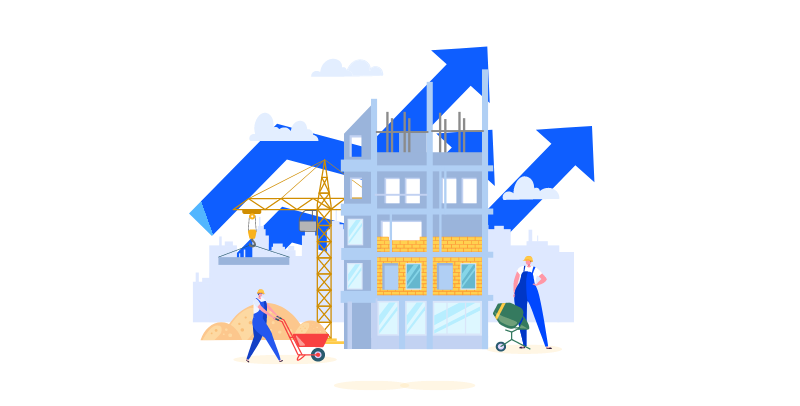
On a $2 million project, it's common to see 10–15% of costs lost to inefficiency—miscommunication, rework, delays, administrative breakdowns. That's $200,000–$300,000 in lost margin on a single job. When systems are aligned and built around actual workflows, recovering even part of that loss changes the outcome of the entire project. Scale that across multiple jobs over the course of a year, and you're not looking at a technology upgrade. You're looking at a fundamental shift in how the business performs.
This is what that change looked like for one company.
What low-code workflow alignment looks like on a construction job site
When that alignment is in place, the impact is tangible and immediate. Teams know where jobs stand in real time. Communication becomes clearer, rework drops, and billing flows more consistently. And instead of guessing at margins after the fact, companies can see performance as the work is actually happening.
That's where most of the loss has been all along—not in the work itself, but in the gaps between systems.
Low-code and AI don't close those gaps on their own. But when they're used to build systems that genuinely reflect how work gets done, they make those gaps visible—and fixable. And that's where things start to change.
Clean Community Inc. has worked extensively in the construction space, helping companies build systems on Zoho Creator that align with how their operations actually run. If you want to see what that looks like in practice, their case studies page shows how that's been applied across different projects.
 Zoho Creator
With over 20 years of experience, Zoho Creator is an AI-powered low-code development platform used to build custom business applications. It enables users to create powerful, scalable solutions with minimal coding expertise. Stay tuned for more insights on low-code and digital transformation.